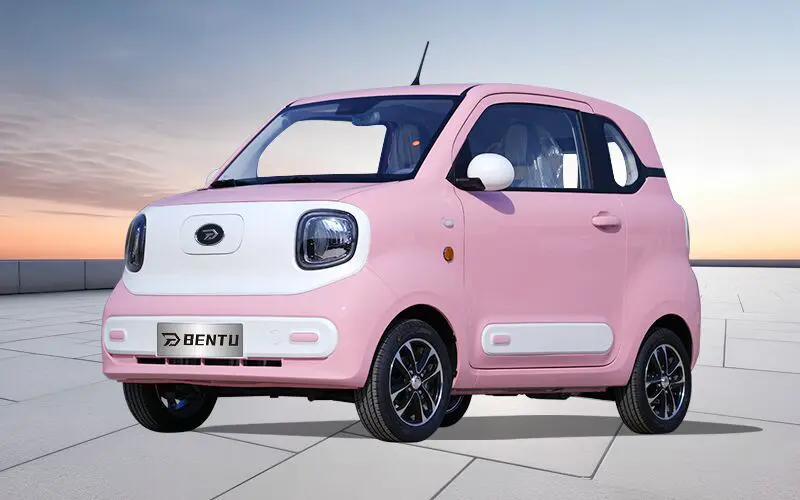


Abstract
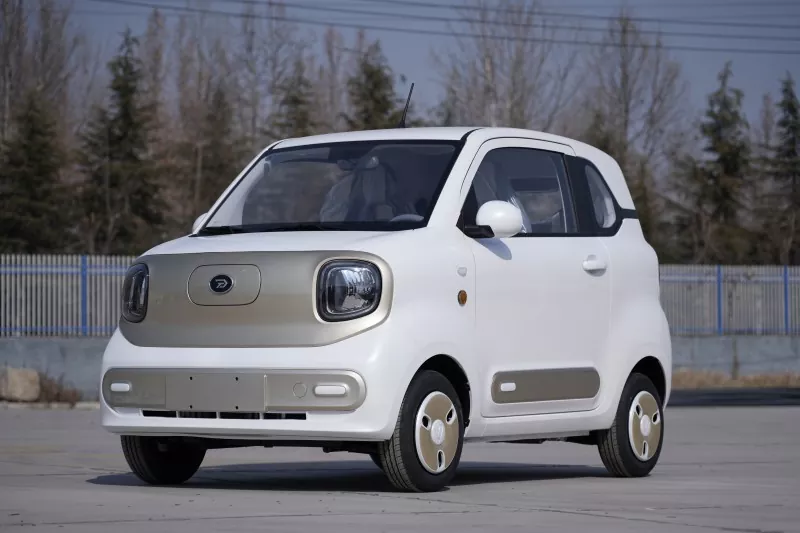
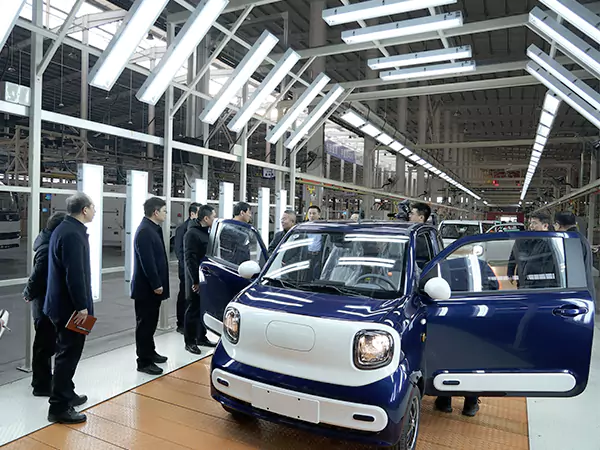
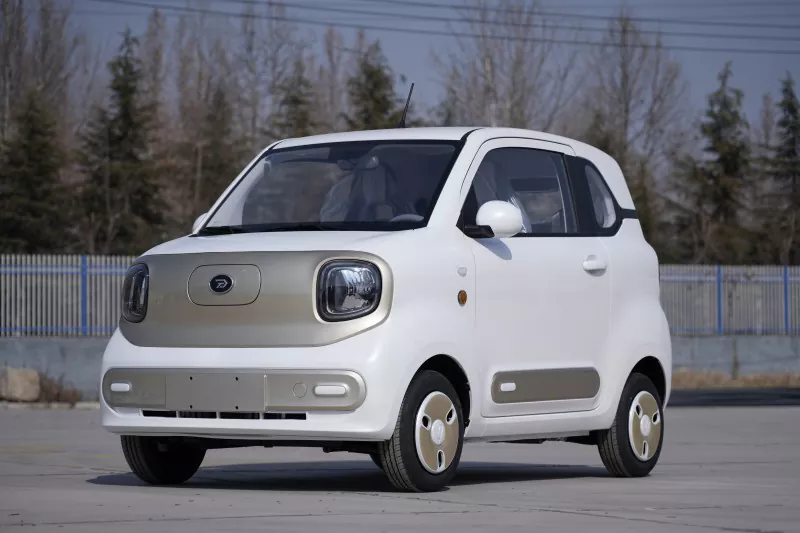
Compact electric mobility is no longer a novelty—it is a calculated response to congestion, parking scarcity, and the everyday cost of moving through dense urban environments. The WIth EEC Certificated MAE Mini EV Bambino enters this conversation not as a stripped-down experiment, but as a type-approved quadricycle engineered around a specific set of urban realities. This article examines what EEC certification actually changes for a mini EV, how the Bambino’s 13.9 kWh lithium iron phosphate pack and 170 km range translate into daily use, and why the L7e classification opens doors that lighter quadricycles simply cannot. It also looks at the vehicle’s safety architecture, charging behaviour, and the role of BENTU in bringing this platform to Latin American markets. The goal is not to celebrate specifications on paper, but to evaluate whether the Bambino’s combination of size, compliance, and usable range makes it a genuinely practical tool for modern city life.
Table of Contents
- What Does EEC Certification Actually Change for a Mini EV?
- The Bambino’s Technical Profile: 13.9 kWh, 170 km, and a 3-Meter Footprint
- Daily Urban Practicality: Parking, Turning, and Four-Seat Flexibility
- Highway and Speed Realities: What 85–90 km/h Feels Like in Practice
- Charging Without Friction: Overnight Habits and Public Top-Ups
- Safety Architecture: ABS, EBD, Hill Assist, and the L7e Standard
- The Latin American Context: MAE, BENTU, and Local Service
- Frequently Asked Questions
What Does EEC Certification Actually Change for a Mini EV?
The phrase “EEC certificated” is often printed on specification sheets without explanation, as if the letters alone settle every question a buyer might have. In practice, EEC certification—more precisely, European type-approval under Regulation (EU) No 168/2013—determines the regulatory category a vehicle belongs to, and that category dictates almost everything about how the vehicle can be used, who can drive it, and what safety equipment it must carry.
For the WIth EEC Certificated MAE Mini EV Bambino, the relevant category is L7e, the heavy quadricycle class. This is not a marketing label. L7e vehicles are permitted to reach higher speeds than light quadricycles (L6e), and they are subject to a distinct set of construction and performance requirements. The Bambino’s factory-limited top speed sits at 85–90 km/h, placing it firmly within the L7e envelope rather than the 45 km/h ceiling that defines L6e microcars.
The practical consequence is access. An L6e quadricycle is largely confined to urban and peri-urban roads where low speeds prevail. An L7e vehicle, by contrast, is legally permitted on many secondary highways and urban expressways, provided local regulations allow it. That difference matters for a commuter who needs to link a residential district to an employment zone across a short stretch of dual carriageway, or for a small business that needs to move people and light cargo beyond a single neighbourhood.
Regulatory distinction that shapes daily use: L7e heavy quadricycles are designed for speeds in the 80–90 km/h range and are generally accepted on roads where L6e vehicles are not. The Bambino’s EEC certification is the document that makes this positioning legible to insurers, registration authorities, and fleet managers.
Certification also carries implications for driver licensing. In several European markets, L7e quadricycles can be driven with a B1 licence from the age of 16, while other jurisdictions require a full Category B licence. For the Bambino, this flexibility is part of its appeal in markets where younger drivers or second-vehicle users need a compliant, low-cost mobility option without stepping into a full passenger car.
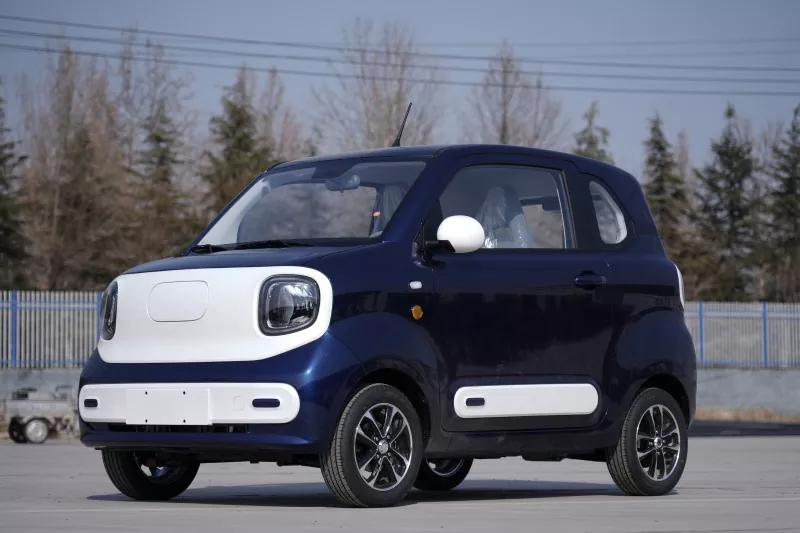
What certification does not do is turn a quadricycle into a conventional car. The Bambino remains a compact, lightweight platform with a 3,000 mm overall length and a 590 kg curb weight. Its value lies in being honest about that footprint and engineering around it, rather than pretending the vehicle competes with a B-segment hatchback on every dimension.
The Bambino’s Technical Profile: 13.9 kWh, 170 km, and a 3-Meter Footprint
The Bambino’s specification sheet is compact enough to read in a single sitting, but several figures deserve closer attention because they define the vehicle’s usable envelope. The table below consolidates the core technical data, followed by an interpretation of what each cluster means in everyday terms.
| Parameter | Bambino (BT-05) Figure |
| Energy type | Pure electric |
| Battery chemistry | Lithium iron phosphate (LFP) |
| Battery capacity | 13.9 kWh |
| Driving range | 170 km |
| Maximum speed | 90 km/h (factory-limited; L7e compliance ceiling 85 km/h) |
| Motor rated power | 13 kW |
| Motor peak power | 20 kW |
| Dimensions (L × W × H) | 3,000 × 1,498 × 1,630 mm |
| Wheelbase | 1,953 mm |
| Curb weight | 590 kg |
| Seating | 2 (4) — two-seat configuration standard, four-seat capability indicated |
| Drive type | Rear-wheel drive |
| Front suspension | MacPherson independent suspension |
| Rear suspension | Integral bridge non-independent suspension |
| Front brakes / Rear brakes | Solid disc / Drum |
| Tyre size | 165/55 R13 |
| Minimum turning radius | 4.28 m |
| Charging (slow) | 6.5 hours |
The 13.9 kWh LFP pack is the heart of the Bambino’s daily proposition. LFP chemistry is valued in urban EVs for its thermal stability and tolerance for frequent partial charging, both of which matter when a vehicle is plugged in overnight and unplugged the next morning rather than run through deep discharge cycles. A 170 km range on this capacity places the Bambino in a realistic daily window of roughly 80–110 km of mixed urban driving, accounting for auxiliary loads such as cabin heating or cooling and the natural variance between homologated and real-world consumption.
The motor’s 13 kW continuous and 20 kW peak output is modest by passenger-car standards, but the Bambino’s 590 kg curb weight means the power-to-weight ratio is adequate for its intended speed envelope. Acceleration to 50 km/h is accomplished without drama, and the rear-wheel-drive layout gives the front wheels a clean steering role, which contributes to the 4.28 m turning radius—a figure that translates into U-turns in narrow streets and confident manoeuvring in crowded parking structures.
Why LFP matters in a vehicle this size: Lithium iron phosphate cells trade some energy density for stability and cycle life. In a 13.9 kWh urban quadricycle, that trade is sensible: the pack is rarely stressed by sustained high-current demands, and the chemistry’s resilience supports the kind of daily shallow cycling that characterises city use.
The four-seat capability indicated in the specification is worth reading carefully. The Bambino’s 3,000 mm length does not create limousine-like rear accommodation, but it does allow the vehicle to function as a genuine four-seat runabout for short urban trips—school drop-offs, team lunches, or ferrying colleagues between sites. For many buyers, that flexibility is the difference between a single-purpose toy and a vehicle that earns its parking space.
Daily Urban Practicality: Parking, Turning, and Four-Seat Flexibility
Urban practicality is not a single metric. It is the accumulated result of dozens of small interactions: finding a parking space, turning into a tight side street, loading a bag of groceries, and fitting into a garage that was built for a smaller era of motoring. The Bambino’s dimensions are calibrated for these interactions rather than for motorway dominance.
At 3,000 mm long and 1,498 mm wide, the vehicle occupies roughly the footprint of a large motorcycle with a roof, or a very compact city car from the 1980s. Standard parking bays that would leave a conventional hatchback struggling to open its doors provide ample clearance for the Bambino. The 1,630 mm height, meanwhile, gives the driver a more upright seating position and a better view over low walls and through the rear glass of larger vehicles—a practical advantage in stop-start traffic.
- Parking confidence: The short overhangs and 4.28 m turning radius reduce the cognitive load of manoeuvring into parallel or perpendicular spaces.
- Lane discipline: A 1,498 mm width leaves generous margins within a standard 3.0–3.5 m urban lane, making the vehicle less stressful to place in heavy traffic.
- Garage compatibility: The 1,630 mm height clears most residential garage doors and mechanical parking systems that reject taller SUVs.
- Cabin access: The relatively tall body and upright pillars ease entry and exit for older users or those carrying bags, compared with low-slung compact cars.
The four-seat configuration adds a layer of social utility that two-seat quadricycles cannot match. A two-seater is a solo commuter or a couple’s runabout. A four-seater can collect a colleague from the train station, carry two children to school, or serve as a shared vehicle within a small team. The rear seats are not intended for long journeys, but for the short trips that constitute the majority of urban mileage, they expand the vehicle’s usefulness considerably.
Rear-wheel drive is an unusual choice in this segment, and it contributes to the Bambino’s character. With the front wheels relieved of drive forces, steering remains cleaner under acceleration, and the turning circle benefits. In wet or loose-surface conditions, the rear-drive layout demands a little more respect from the driver, but the modest power output keeps the vehicle predictable.
Highway and Speed Realities: What 85–90 km/h Feels Like in Practice
A common source of misunderstanding around mini EVs is the gap between the homologated top speed and the speed a driver can actually sustain in real conditions. The WIth EEC Certificated MAE Mini EV Bambino is rated at 90 km/h, but its L7e compliance envelope and electronic governance mean that sustained cruising sits closer to 80–85 km/h depending on state of charge, payload, gradient, and ambient temperature.
Independent testing of the Bambino platform has shown that at 100% state of charge with a single occupant, the vehicle can achieve a GPS-verified 87 km/h on a flat road. With two adult passengers and an 80% state of charge, that figure settles at around 80 km/h. On a 4% uphill grade at 70% state of charge, the motor controller limits current and the achievable speed drops to roughly 74 km/h. These are not defects; they are the predictable behaviour of a lightweight EV with a modestly sized battery and an air-cooled or passively managed powertrain operating within its designed envelope.
| Real-world condition | Achieved top speed | What it means for the driver |
| Flat road, 100% SoC, driver only (75 kg) | 87 km/h (GPS) | Comfortably meets L7e highway thresholds on level ground |
| Flat road, 80% SoC, two passengers (150 kg) | 80 km/h | Stable and sustainable; no thermal stress observed |
| 4% uphill grade, 70% SoC, driver only | 74 km/h | Motor controller limits current to protect the pack; expect to lose speed on long climbs |
| Highway cruising at constant 80 km/h | Range ≈ 78 km | Versus ≈112 km in city conditions; highway use demands more frequent charging |
The lesson is straightforward: the Bambino is not an Autobahn vehicle, and it does not pretend to be. It is engineered for regional highways with speed limits of 80–90 km/h, urban expressways, and the connective roads between neighbouring towns. Pushing beyond 85 km/h triggers an electronic governor, which is both a legal requirement for L7e compliance and a sensible protection for the battery and motor.
For a driver whose daily route includes a 10–15 km stretch of dual carriageway at 80 km/h, the Bambino is entirely capable. For a driver who expects to cruise at 120 km/h for an hour, it is the wrong tool—and no amount of specification-sheet optimism changes that. The value of EEC certification is that it makes this boundary explicit rather than leaving buyers to discover it through trial and error.
Charging Without Friction: Overnight Habits and Public Top-Ups
Charging behaviour is where the Bambino’s design philosophy becomes most visible. The vehicle is built around slow, opportunistic charging rather than fast-road-trip replenishment. The specification lists a 6.5-hour slow charge for the 13.9 kWh pack, which aligns with an overnight routine: plug in after dinner, unplug before breakfast, and begin the day with a full battery.
In practice, most urban owners do not run the pack to zero. The working window is closer to 20–80%, and a standard household outlet or a modest wallbox can replenish that window in a few hours. Public AC charging at higher current can add 60–70 km of real-world range in roughly 90 minutes, which is enough to cover an errand loop while the driver shops or works.
- Home charging: A standard outlet supports overnight replenishment without dedicated infrastructure; a 3.7 kW wallbox reduces the 20–80% window to under three hours.
- Workplace charging: A full workday on a low-power AC connection is more than sufficient for a typical urban commute.
- Public top-ups: AC chargers in car parks and shopping centres add usable range during routine stops; the vehicle is not designed around high-power DC charging as a daily habit.
- Battery longevity: The onboard charger tapers current in the final portion of the charge to protect cell health, adding a small amount of time but supporting long-term capacity retention.
The 170 km range figure should be read as a city-cycle estimate. In mixed urban conditions with moderate auxiliary use, 110–130 km of real-world range is a reasonable expectation. That is enough for several days of commuting, a full day of errands, or a round trip to a neighbouring district without charging anxiety—provided the driver adopts the habit of plugging in when parked rather than treating the battery as a weekly fill-up.
Safety Architecture: ABS, EBD, Hill Assist, and the L7e Standard
Safety in the quadricycle segment is often discussed in terms of what is absent rather than what is present. The Bambino’s specification tells a more balanced story. It includes ABS anti-lock braking, electronic brake-force distribution (EBD), hill-start assist, a driver’s airbag, tyre-pressure monitoring, and ISOFIX child-seat anchorages—a package that exceeds the minimum expectations for many L6e vehicles and aligns with the more demanding L7e regulatory environment.
The passive safety structure uses a passenger cell constructed with a significant proportion of high-strength steel, reinforced doors, and anti-collision bars in the sides. These measures are not equivalent to the crash structure of a full-size passenger car, but they represent a deliberate engineering effort to manage energy in a low-speed urban impact—the type of collision the Bambino is most likely to encounter.
Safety features that matter in daily driving: ABS and EBD improve braking stability on wet or uneven surfaces; hill-start assist prevents rollback on inclines; rear parking radar and a reverse camera reduce low-speed collision risk in tight spaces; and the low-speed driving warning sound alerts pedestrians who may not hear the electric powertrain approaching.
The driving-assistance layer is calibrated for urban use rather than highway autonomy. A rear-view camera and two ultrasonic parking radars address the most common low-speed collision scenarios: reversing into a bollard, clipping a pillar in a car park, or misjudging the distance to a wall. The 7-inch fully liquid-crystal instrument panel provides clear speed and state-of-charge information without visual clutter, and the driving-mode selector allows the driver to choose between efficiency-oriented and more responsive throttle maps.
Brake energy recovery is included, which serves two purposes: it returns a modest amount of energy to the pack during deceleration and provides a degree of engine-braking effect that can reduce reliance on the friction brakes in stop-start traffic. The hill-start assist system holds the brake briefly when the driver releases the pedal on an incline, preventing the rollback that can occur in a lightweight vehicle with a short wheelbase.
It is important to be candid about the limits of quadricycle safety. The Bambino’s 590 kg curb weight and 3,000 mm length mean it carries less mass and deformation distance than a conventional car. Its safety systems are designed to mitigate the consequences of urban-speed impacts, not to replicate the protection of a larger vehicle in a high-energy collision. Buyers who understand this distinction can use the vehicle appropriately; those who expect passenger-car crash performance may be disappointed.
The Latin American Context: MAE, BENTU, and Local Service
The Bambino’s European certification is only part of its market story. In Latin America, the vehicle is positioned under the MAE brand, with BENTU providing the manufacturing platform and quality framework. This division of roles is significant: MAE contributes local market knowledge and service infrastructure, while BENTU contributes the engineering and production discipline behind the BT-05 platform.
The Latin American urban context rewards exactly the characteristics the Bambino possesses. Many cities in the region combine dense cores, limited parking, short average trip distances, and a growing appetite for electrification that is not always matched by extensive high-power charging infrastructure. A 3-meter vehicle with a 13.9 kWh LFP pack, overnight charging capability, and a 170 km range fits this environment more naturally than a larger, heavier EV that demands dedicated charging hardware.
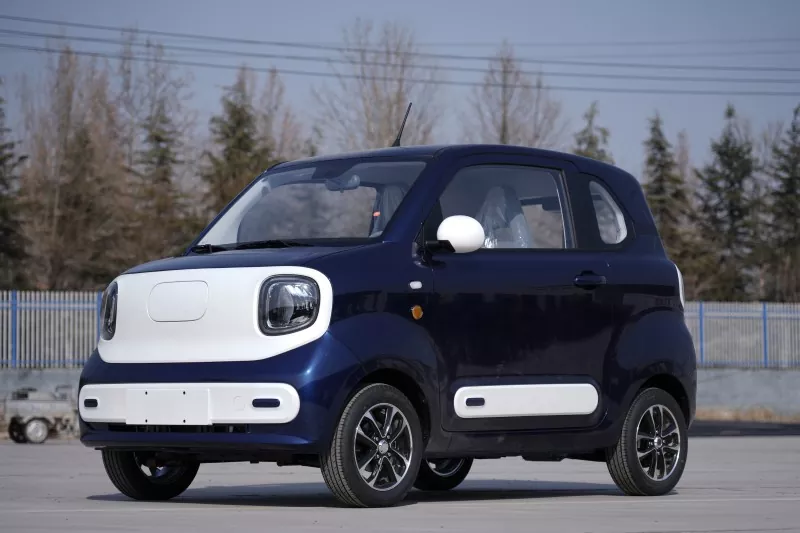
The four-seat cabin also has social relevance in markets where small vehicles often serve as family transport rather than individual commuter pods. A two-seater is a niche product in this context; a four-seat quadricycle can function as a primary urban vehicle for a small household, carrying children, groceries, or a combination of both. The bright colour choices and compact proportions further support its role as a visible, approachable presence in city traffic.
Local service is the variable that determines whether a certified vehicle becomes a trusted one. The MAE partnership is designed to address this by pairing the Bambino’s type-approved engineering with a regional support network capable of handling routine maintenance, warranty administration, and parts availability. For fleet buyers and individual owners alike, the presence of local service changes the ownership equation: it reduces the friction of repairs and increases confidence that the vehicle will remain operational over its service life.
A note on market positioning: The Bambino is not the cheapest quadricycle on paper, nor the fastest. Its proposition is built on the combination of EEC certification, LFP battery stability, four-seat flexibility, and a footprint that genuinely fits dense cities. Buyers who prioritise those attributes over raw range or top speed are the intended audience.
Frequently Asked Questions
Is the Bambino’s 90 km/h top speed legal for highway use?
The Bambino is engineered to the L7e heavy quadricycle category, which permits speeds in the 80–90 km/h range. Its factory-limited top speed of 85–90 km/h is intended for regional highways and urban expressways where local regulations allow L7e vehicles. It is not designed for high-speed motorways with limits above 100 km/h. The electronic governor that limits speed is a compliance feature, not a restriction to be bypassed.
How does the 13.9 kWh LFP battery behave in cold weather?
Lithium iron phosphate chemistry is more sensitive to low temperatures than some other lithium-ion formulations, and the Bambino’s range will contract in cold conditions, particularly when cabin heating is used. Independent testing indicates that the vehicle maintains a high proportion of its top-speed capability at temperatures around −5°C, supported by thermal management, but real-world range in winter should be expected to be lower than the 170 km homologated figure. Preconditioning while plugged in, where available, helps mitigate this effect.
Can the Bambino be charged from a standard household outlet?
Yes. The 6.5-hour slow-charge time is calibrated for ordinary AC charging, including household outlets where the electrical installation supports the continuous load. A dedicated wallbox is preferable for regular use because it provides a safer, faster, and more convenient charging routine. Public AC chargers are also compatible and can add meaningful range during short stops.
Does the Bambino have enough safety equipment for urban driving?
The Bambino includes ABS, EBD, hill-start assist, a driver’s airbag, tyre-pressure monitoring, ISOFIX anchorages, rear parking radar, and a reverse camera. This is a meaningful package for the L7e category and covers the most common urban collision scenarios. It does not provide the crash protection of a larger passenger car, and drivers should operate it within the speed and road environments for which it was designed.
What is the real-world range of the WIth EEC Certificated MAE Mini EV Bambino in city driving?
Under mixed urban conditions with moderate climate-control use, a realistic range of roughly 110–130 km can be expected from the 13.9 kWh pack. Highway cruising at 80 km/h reduces this to approximately 78 km. The 170 km figure represents a homologated city-cycle result rather than a guaranteed real-world outcome in every condition.
Who is the Bambino designed for?
The Bambino is aimed at urban commuters, small households, and light commercial users who need a compact, type-approved electric vehicle for short trips. It suits drivers who value parking ease, low-speed manoeuvrability, four-seat flexibility, and overnight charging over long-distance range or high-speed performance. It is also relevant for markets where L7e vehicles offer licensing or access advantages over conventional cars.
Ready to explore how the WIth EEC Certificated MAE Mini EV Bambino can fit into your city, your fleet, or your daily routine? The next step is a conversation about specifications, availability, and local support.
Contact Us